
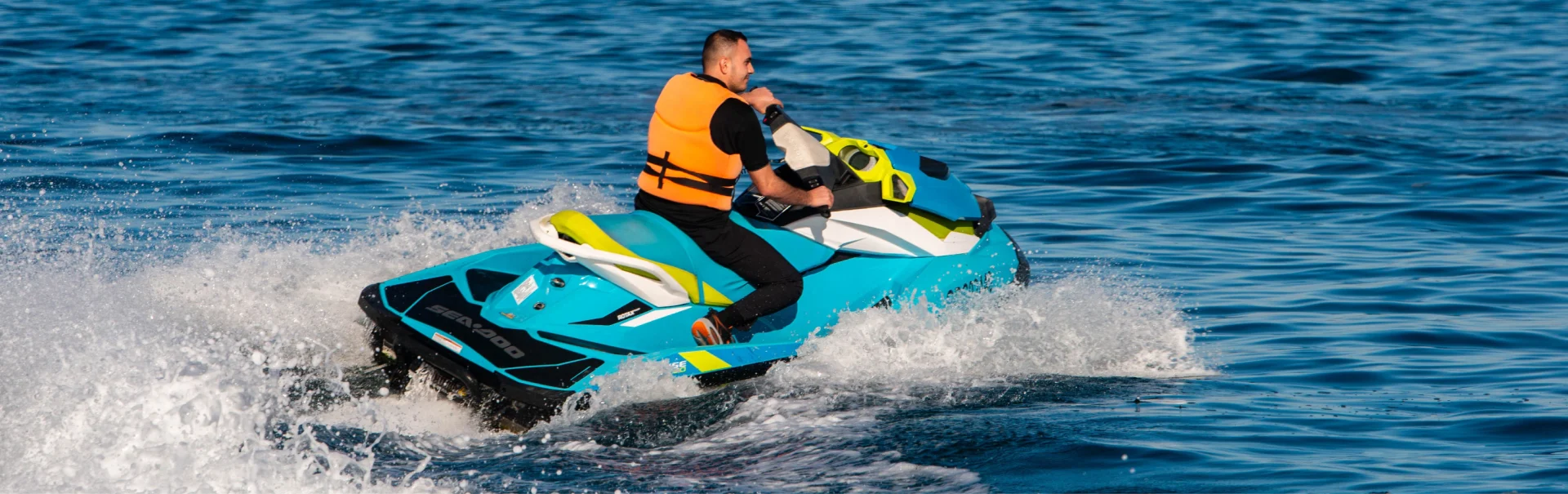

Personal watercraft can be exciting to own, but they also come with risks that are different from those associated with a car or home. A Jet Ski, WaveRunner, Sea-Doo, or other personal watercraft can be involved in collisions, theft, property damage, injuries, towing situations, and other losses both on and off the water. Personal watercraft insurance can help address certain risks, subject to the coverage, limits, deductibles, exclusions, and conditions of the policy.
Not every insurance company evaluates a personal watercraft or its operator the same way. The type of PWC, its value, age, performance, where it is used, who operates it, and other factors can affect available coverage and pricing.
Ask a Sky-Agent® about your PWC insurance options.
Call 1-800-771-7758 or visit SkyBlue.com.
What Is Personal Watercraft Insurance?
Personal watercraft insurance is designed to provide certain property and liability protections for eligible Jet Skis and other PWCs. The exact protection varies by insurance company and policy, but coverage may be available for risks involving the watercraft itself, the owner or operator’s liability, medical expenses, theft, and other exposures.
Personal watercraft policies are not all identical. Some coverages may be included automatically, while others may be optional or unavailable depending on the insurer, watercraft, location, operator, or policy form.
Why Consider PWC Insurance?
Even when insurance is not required for a particular situation, an owner may still want protection against the financial consequences of an accident or other covered loss.
A personal watercraft can cause significant damage or injury in a collision. Owners may also face losses involving theft, vandalism, fire, storms, transportation, or damage to the PWC itself. Insurance can provide a way to transfer certain eligible risks to an insurer rather than assuming the entire financial exposure personally.
Requirements can also arise from financing agreements, marinas, storage facilities, or other contracts. Owners should review any applicable agreements rather than assuming insurance is or is not required.
What Does PWC Liability Insurance Cover?
Liability coverage may help protect an insured when they are legally responsible for certain bodily injury or property damage arising from an eligible covered incident involving the PWC.
Examples could include an accident in which an insured operator collides with another watercraft or causes covered damage to another person’s property. Liability coverage may also include certain legal defense costs, subject to the policy terms.
Limits matter. A policy’s liability limit establishes how much protection may be available for a covered liability claim, subject to the actual policy language. Owners should review available limits based on their individual circumstances.
What About Damage to the Jet Ski or PWC?
Depending on the policy, physical-damage coverage may help pay for eligible damage to the insured personal watercraft after a covered loss.
Covered causes of loss vary, but available protection may address certain losses involving:
- Collisions
- Theft
- Vandalism
- Fire
- Certain weather-related events
- Other covered causes of loss specified by the policy
Deductibles, exclusions, valuation provisions, navigation restrictions, storage requirements, and other conditions can affect how coverage applies.
Does PWC Insurance Cover Medical Expenses?
Medical payments coverage may be available to help with certain eligible medical expenses following a covered PWC accident, regardless of fault in some circumstances.
Who qualifies, what expenses are eligible, the available limit, and how the coverage applies depend on the policy and insurer. Owners should review these details rather than assuming all medical expenses arising from a watercraft accident will be covered.
What Is Uninsured or Underinsured Boater Coverage?
Where available, uninsured or underinsured boater coverage may provide protection when an insured is injured in a covered accident involving another boater who has no insurance or insufficient applicable liability insurance.
Availability, terminology, limits, and requirements vary by insurer and policy. Ask whether this coverage is offered and how it works when comparing PWC insurance options.
Who Is Allowed to Operate the PWC?
Who operates the watercraft can matter significantly. A policy may contain requirements, restrictions, exclusions, age limitations, or other provisions regarding operators.
If family members, friends, or other individuals may operate your PWC, discuss that with the insurance professional before purchasing coverage. Do not assume that every person you allow to ride or operate the watercraft automatically receives the same protection.
Are Passengers Covered?
Coverage involving passengers depends on the circumstances and policy provisions. Medical payments, liability, or other applicable coverage may respond to certain covered losses, but the details vary.
Because personal watercraft are often shared recreationally, understanding how the policy treats passengers and operators can be just as important as understanding how it covers the watercraft itself.
What About Equipment and Accessories?
Many PWC owners add equipment or carry accessories that may not be treated exactly the same as the watercraft itself.
Depending on the insurer and policy, owners may want to ask about coverage for items such as:
- Aftermarket equipment
- Navigation or electronic equipment
- Safety equipment
- Watercraft accessories
- Other permanently attached or portable equipment
Special limits, exclusions, or documentation requirements may apply. If you’ve invested significantly in accessories or modifications, make sure the insurer knows what has been added.
Is the PWC Trailer Covered?
A trailer used to transport a personal watercraft may require its own consideration. Some PWC insurance policies may provide certain trailer coverage, while other arrangements may apply depending on the insurer and circumstances.
Ask whether the trailer is covered for physical damage or theft, what limit applies, and whether a deductible is involved. Also consider liability while towing separately, because different insurance policies may apply depending on the circumstances.
What Happens While the PWC Is Being Transported?
A personal watercraft spends a significant amount of time away from the water. It may be transported on a trailer, parked at a residence, stored at a marina, or kept at a storage facility.
Ask how the policy applies while the PWC is being transported or stored and whether there are restrictions regarding storage location, security, lay-up periods, or transportation.
Does PWC Insurance Include Towing?
On-water towing or assistance coverage may be available from some insurers or through optional coverage. It can potentially help with certain costs if a covered or eligible watercraft becomes disabled on the water.
The services, limits, geographic restrictions, and eligibility requirements vary, so owners should review what is actually included before relying on this protection.
Are Watersports Covered?
Using a PWC for watersports or towing activities can introduce additional risks and may be treated differently by different insurers.
If the watercraft will be used for activities such as towing a tube or participating in other recreational activities, disclose the intended use when shopping for insurance. Coverage, restrictions, and eligibility may vary by policy and activity.
What Isn’t Covered by PWC Insurance?
No insurance policy covers every possible loss. Exclusions and limitations vary, but policies may restrict or exclude certain losses involving circumstances such as:
- Normal wear and tear
- Deterioration
- Mechanical breakdown
- Intentional acts
- Unauthorized or excluded operators
- Certain racing or high-risk activities
- Commercial use
- Use outside permitted navigation areas
- Other excluded causes or uses identified by the policy
This is why reviewing the exclusions can be just as important as reviewing the list of coverages.
Not sure how your current PWC policy handles operators, trailers, accessories, towing, or physical damage? A Sky-Agent® can help you compare available options and explain important differences between policies.
Ask a Sky-Agent® about your PWC insurance options.
Call 1-800-771-7758 or visit SkyBlue.com.
Actual Cash Value vs. Agreed Value
The way a PWC is valued can affect the amount payable after an eligible covered total loss. Two concepts an owner may encounter are Actual Cash Value and Agreed Value.
Actual Cash Value
Actual Cash Value generally takes depreciation and other relevant valuation factors into consideration when determining the value of covered property at the time of loss, subject to the policy terms.
Agreed Value
Under an Agreed Value arrangement, the insurer and insured generally establish an insured value for the watercraft when the policy is written. How a covered loss is settled still depends on the specific policy language, deductible, limits, and applicable conditions.
Neither approach should automatically be considered the right choice for every owner. Availability and suitability depend on the watercraft, insurer, policy terms, price, and the owner’s individual needs.
What Factors Can Affect PWC Insurance Pricing?
Insurance companies evaluate risk differently, so the same owner and PWC may receive different pricing or eligibility decisions from different insurers.
Factors that may be considered include:
- Make and model
- Age of the PWC
- Value
- Engine or performance characteristics
- Owner or operator experience
- Operator age
- Claims or loss history
- Where and how the PWC is used
- Storage arrangements
- Navigation area
- Selected coverage and limits
- Deductibles
- Safety courses or other insurer-specific factors
Because underwriting guidelines vary, comparing more than one available insurance option can be useful.
Can I Insure More Than One Personal Watercraft?
Some insurers may offer options for households with multiple personal watercraft, boats, vehicles, homes, or other eligible policies. Availability and potential discounts or account benefits vary by insurer.
If you own more than one PWC or have other insurance needs, provide that information when requesting quotes so available options can be evaluated together.
What Information Should I Have When Shopping for PWC Insurance?
Having accurate information can make the quoting process easier. Be prepared to provide details such as:
- Year, make, and model
- Hull Identification Number (HIN)
- Estimated or documented value
- Engine or performance information
- Trailer information
- Accessories or modifications
- Primary operators
- How and where the PWC will be used
- Storage location
- Prior insurance and claims information
- Requested liability and physical-damage coverage
Questions to Ask When Comparing PWC Insurance
- What liability limit does the policy provide?
- How is physical damage to my PWC covered?
- Is the watercraft insured on an Actual Cash Value or Agreed Value basis?
- Who is allowed to operate the PWC?
- How are passengers treated under the policy?
- Is my trailer covered?
- Are accessories and aftermarket equipment covered?
- Is on-water towing available?
- Is uninsured or underinsured boater coverage available?
- Are there navigation or geographic restrictions?
- How does coverage apply while the PWC is stored or transported?
- What activities or uses are excluded?
- What deductibles apply?
Compare More Than the Premium
The lowest-priced PWC insurance policy is not necessarily the policy that best fits every owner’s needs. Two policies can have different liability limits, deductibles, valuation methods, operator restrictions, accessory coverage, towing benefits, exclusions, and other provisions even when their premiums appear similar.
Different insurance companies may also evaluate the same personal watercraft and owner differently. Comparing available options can help you understand not only what a policy costs, but what you’re actually receiving for that premium.
Ready to Review Your Personal Watercraft Insurance Options?
A licensed Sky-Agent® can help shop available PWC insurance programs and explain differences in coverage, limits, deductibles, valuation methods, and other policy features so you can make a more informed decision.
Ask a Sky-Agent® about your PWC insurance options.
Call 1-800-771-7758 or visit SkyBlue.com.
SkyBlue Insurance — More options. Better choices.
Frequently Asked Questions
PWC insurance is insurance designed for eligible personal watercraft such as Jet Skis, WaveRunners, Sea-Doos, and similar recreational watercraft. Depending on the insurer and policy, available protection may include liability, physical damage, theft, medical payments, and other coverages.
Insurance requirements can depend on the circumstances, financing agreements, contracts, location, and other factors. Even when insurance is not legally required for a particular situation, owners may choose coverage to help protect against certain financial risks associated with liability, damage, theft, and other covered losses.
Theft coverage may be available under physical-damage protection, subject to the policy’s terms, deductible, exclusions, and conditions. Owners should verify how theft is handled under the specific policy being considered.
Coverage for other operators depends on the insurance policy. Age requirements, operator restrictions, exclusions, and other conditions may apply, so owners should disclose who may operate the watercraft and review the policy carefully.
Trailer coverage may be available depending on the insurer and policy. Owners should confirm whether their trailer is insured, what limit and deductible apply, and how coverage works while the PWC is being transported.
Actual Cash Value generally considers depreciation and other valuation factors when determining the value of covered property at the time of loss. Agreed Value generally establishes an insured value when the policy is written. Actual claim settlements depend on the policy’s specific terms, limits, deductibles, and conditions.
Insurance companies have different underwriting guidelines, pricing models, coverage options, limits, deductibles, and eligibility requirements. The same personal watercraft and owner may therefore receive different options from different insurers.
Insurance Disclaimer
Insurance availability, eligibility, pricing, coverage, limits, deductibles, exclusions, valuation methods, terminology, and policy terms vary by insurance company, location, watercraft, operator, and individual circumstances. Coverage descriptions in this article are general and provided for educational purposes only. They do not modify, replace, or supersede the terms, conditions, limitations, or exclusions of any insurance policy. Coverage is subject to the actual policy language and applicable underwriting requirements. Consult a licensed insurance professional regarding your individual insurance needs.
AI Disclosure
Disclosure: AI was used to assist with research and drafting for this article. The content was subsequently reviewed, fact-checked, and edited by Stephen G. LaCroix, a licensed insurance agent in all 50 states (CA License #0E67458, NPN 8344418).